Tutorials are a fun and educational tradition of the IEEE-PVSC Annual Conference. These extended sessions will take place the Sunday before the conference event dates. Tutorials give a deep insight into selected research & development topics and serve both as an expert review of the field for all, as well as an introduction for newcomers. The tutorials are given by some of the most recognized and experienced scientists in the field. All tutorials come with a set of slides which are an indispensable source of information that you will not find anywhere else!
Tutorial sessions will take place on Sunday, June 7, 2026.
AM Tutorials will start at 9am Eastern Daylight Time and PM Tutorials will start at 1pm Eastern Daylight Time.
Tutorial AM2: PV Systems Modeling with Python: an Interactive Introduction
Tutorial AM3: Perovskite and Tandem Packaging and Reliability
Tutorial PM2: Emerging Space Photovoltaics: Unique Semiconductors, Device Designs and Radiation Interactions
Tutorial PM3: Performance Testing of PV Cells and Modules
Tutorial PM4: Expanding PV Deployment Through Dual-Use Pathways
Click below to learn more about each tutorial.
Tutorial AM1: Fundamentals of Photovoltaics

Instructor:
Jacob Krich, University of Ottawa, Canada
Tutorial Description
The tutorial will give an overview of the solar resource, solar cells, metrics for evaluating their quality, and the major types of solar cells in production or research today. It will begin by surveying the properties and availability of sunlight, introducing some commonly used data sources. A simple thermodynamic model for solar power conversion will be established, which will provide an upper bound on the conversion efficiency of sunlight to electricity. We will then show that using a semiconductor absorber leads to the usual measures for solar cell performance -- short-circuit current, open circuit voltage, and fill factor -- and introduces additional constraints to photovoltaic power conversion, leading to the famous Shockley-Queisser efficiency limits. We will discuss the carrier transport and recombination processes that are present in practical solar cells in the context of Shockley’s diode equation. Analytical models for solar cell dark current, quantum efficiency, and reciprocity between absorption and emission will be introduced.
Having established a conceptual framework for PV devices, the present laboratory status and manufacturing of several solar cell technologies will be surveyed, including those made from crystalline silicon, III-V, CdTe, CIGS, organic and perovskite in both single junction and tandem architectures. The application of these solar cells in PV power systems will be discussed together with the economic and life-cycle metrics that are commonly used to determine the feasibility and desirability.
Jacob Krich is a Professor at the University of Ottawa in the Department of Physics. He is a theoretical condensed matter physicist focusing on novel pathways to high efficiency photovoltaics and on nonlinear spectroscopy. He received his BA in Physics from Swarthmore College in Pennsylvania, followed by an MMath from Oxford University, where he was a Rhodes Scholar. He received his PhD in theoretical condensed-matter physics from Harvard University. After receiving his PhD, he was a Ziff Fellow of the Harvard University Center for the Environment and a postdoctoral fellow in the Department of Chemistry and Chemical Biology at Harvard. Dr. Krich joined the University of Ottawa in 2012 and received the Ontario Ministry of Research and Innovation Early Researcher Award for his contributions to the field of novel photovoltaics in 2018.
Tutorial AM2: PV Systems Modeling with Python, an Interactive Introduction


Instructors:
Andrea Quattrone, DNV
Rajiv Daxini, National Laboratory of the Rockies (NLR, formerly NREL)
Tutorial Description
PV modeling is used during all stages of PV projects, including pre-feasibility studies, plant layout optimization, and management of operational assets. Modeling tools for all aspects of photovoltaic systems are rapidly growing, and there are solutions for many research questions you might want to explore. Python has become the main scientific language for open-source PV modeling, and many open-source tools are now available for PV modeling. This tutorial will focus on teaching attendees PV modeling in python through pvlib.
In this interactive tutorial, we will go from getting acquainted with some common data used or measured in PV systems (i.e., weather) to modeling the AC energy output of a single-axis tracker system. This includes learning and simulating sun position, plane-of-array irradiances, temperature models, and inverter output. We will review common vocabulary around Python and common PV data aggregation by hour, week, month, and visualization. The tutorial will finalize with an overview of other available open-source tools for other aspects of modeling PV systems and novel ideas on data science in the PV field.
Andrea Quattrone is a solar energy analyst at DNV and part of the solar energy assessment team. His work includes performance modeling for utility scale and distributed generation solar power plants, PV residential portfolio analysis, operational energy assessments and development of Python based tools to automate and improve energy analysis processes. Andrea has worked in solar energy for the past six years, prior experiences include SCADA Engineer for solar power plants and Technical Project Manager for solar on-site measurements campaigns. Recently he has supported work to improve DNV snow loss methodology and rooftop PV shade loss estimations. Andrea holds a Bachelor's degree in Energy Engineering from Politecnico di Torino and a Master's Degree in Renewable Energy from KTH, Stockholm.
Rajiv Daxini is a postdoctoral researcher at the National Laboratory of the Rockies (formerly NREL), part of the Performance and Tandems group. He currently works on the energy yield modeling of perovskite-enabled tandem PV, and developing data management, experiment tracking, and analysis software tools for the laboratory. He also works on modeling the degradation of single junction photovoltaic technologies, primarily through the development and maintenance of PVDeg—an open-source python package. Dax holds a bachelor's degree in Physics from the University of Warwick, England, and a PhD in Engineering from the University of Nottingham, England. During his undergraduate studies he has also spent time at several other universities, including Nanyang Technological University, Singapore.
Tutorial AM3: Perovskite and Tandem Packaging and Reliability


Instructors:
Chiara Barretta, PCCL, Austria
Michael Owen-Bellini, National Laboratory of the Rockies (NLR, formerly NREL)
DescriptionThe tutorial will provide a comprehensive overview of polymers and encapsulants used in photovoltaic (PV) modules, with a special focus on encapsulation concepts for modules with perovskite and tandem cells. Polymer fundamentals will be introduced, highlighting key properties relevant to PV applications based on new cell technologies. Encapsulant requirements for PV will be discussed, covering traditional designs (glass/backsheet), evolving trends like glass/glass modules, and including next-generation cell technologies. Different polymer types, including thermoplastics and thermosets, will be explored with a focus on processability and performance. Encapsulation of modules with perovskite and tandem solar cells will be discussed in detail, including how polymeric encapsulants can influence module durability and lifetime. Finally, recent advancements and open challenges, complemented by new data on encapsulant performance in these next-generation technologies will be presented.
Chiara Barretta is a researcher at Polymer Competence Center Leoben in the division of “Sustainable Polymer Solutions”, based in Leoben (Austria). Her research is focussed on polymers (encapsulants and backsheets) used in photovoltaic applications. Chiara received her Ph.D. in Material Science and Testing of Polymer from the University of Leoben in 2023. Her work includes development of destructive and non-destructive characterization methods able to describe polymer degradation in PV modules, understanding of degradation mechanisms of PV materials under artificial and real environmental aging conditions, and optimization of processing conditions (such as lamination) according to bill of materials.
Michael Owen-Bellini is a staff scientist at NLR. He specializes in accelerated stress testing and packaging for PV modules. In 2017 he completed his PhD at Loughborough University in the UK where his thesis was topic was understanding PV module mechanics with respect to the encapsulant. At NLR his efforts are focused on understand accelerated stress testing and packaging needs for both incumbent and emerging PV technologies, including metal halide perovskites and tandems.
Tutorial PM1: Tandems and Multijunction Photovoltaics

Instructors:
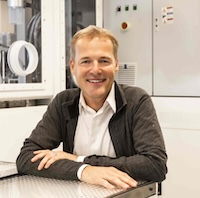
Emily Warren, National Laboratory of the Rockies (NLR, formerly NREL)
Frank Dimroth, Fraunhofer Institute for Solar Energy Systems ISE, Germany
Tutorial Description
This tutorial will give a general introduction to the field of tandem solar cells for the use in terrestrial and space systems. It will start from basic theoretical considerations and explain the benefits of using several pn-junctions to convert the broad solar spectrum into electricity. Since III-Vs have historically dominated the field of multijunctions and high efficiency photovoltaics, we will start by reviewing its main achievements and applications. Some of the specific requirements for the use of multijunctions in different environments will be discussed, such as high current capacity for concentrators, radiation hardness for space applications, and low cost for one-sun applications.
New and on-going efforts toward hybrid tandems, combining cells of different material systems, will then be covered. Silicon- and perovskite-based tandem devices offer the promise of similarly high conversion efficiencies as traditional tandem III-Vs, but at a fraction of the cost. However, these integrated materials systems also come with unique issues that arise due to the various dissimilarities between the materials and the fabrication processes required for different technologies. Furthermore, the question of long-term stability is crucial for perovskite based devices. We will look at the advantages and disadvantages of different material and interconnection combinations in terms of efficiency, cost, and scalability.
Emily Warren is a Senior Scientist and Group Manager at the National Laboratory of the Rockies, in Golden, Colorado, where she manages the Performance and Tandems Group and also co-leads the Perovskite Enabled Tandems Core program. Her research interests focus on the fabrication, modeling, and characterization of multi-terminal tandem solar cells and modules. She also studies novel architectures for the creation of solar fuels as part of the Liquid Sunlight Alliance and dabbles in heteroepitaxial growth of III-V materials on silicon and nanoimprint lithography.
Frank Dimroth is heading the “III-V photovoltaics and concentrator technology” department at the Fraunhofer Institute for Solar Energy Systems (ISE) in Freiburg, Germany. His main fields of research are epitaxial growth of III-V compounds for next-generation multi-junction solar cells. Within the last 25 years he performed applied research for space- and concentrating photovoltaics with additional interest in direct solar to hydrogen conversion. Frank was co-founder of the CPV company Concentrix Solar in 2005 and is currently preparing a new startup Clearsun Energy in the field of CPV technology.
Tutorial PM2: Emerging Space Photovoltaics: Unique Semiconductors, Device Designs and Radiation Interactions


Instructors:
Ahmad Kirmani, Rochester Institute of Technology
Bibhudutta Rout, University of North Texas
Tutorial Description
Space economy is at an inflection point with expansion driven by the commercial sector – SpaceX, Amazon LEO, Eutesat OneWeb, and others. McKinsey & Company estimates the global space economy to expand to $1.8 trillion by 2035. Sustaining this exponential growth necessitates development of space-tolerant and cost-effective space power systems. While there are several emerging space photovoltaic (PV) candidates, metal-halide perovskites are attracting widespread attention thanks to several attributes. Understanding how perovskite semiconductors respond to space stressors is increasingly central to (i) assessing their readiness for space power in emerging Space 2.0 mission architectures and (ii) expanding their use in radiation-facing optoelectronics, detectors, and sensors. This tutorial will offer an introduction to radiation effects in perovskite materials and device stacks, with emphasis on how different particle species deposit energy, generate defects, and ultimately translate into performance loss. Defect healing will be a key focus in this discussion. Participants will learn how to connect the radiation environment (mission profile, particle spectrum, fluence) to materials response (damage mechanisms and defect formation) and to device outcomes (voltage/current losses, interfacial degradation, and stack-level vulnerabilities). The goal is to equip attendees with a coherent framework for interpreting radiation-test data, comparing irradiation modalities, and establishing realistic pathways toward space-qualification of hybrid semiconductors, including perovskites.
Part 1: Metal-Halide Perovskites for Space Power (Instructor: Dr. Ahmad Kirmani)
a. Brief introduction to Space 2.0 & the demand for space solar power
b. Novel semiconductors for space PV: metal-halide perovskites
c. Radiation damage mechanisms in conventional vs. halide perovskites
d. Practical tools for simulating radiation environments, mission profiles and corresponding solar cell damage
e. Designing space-relevant perovskite solar cells
Part II: Radiation-Testing for Space Applications (Instructor: Dr. Bibhudutta Rout)
Investigating Materials and Devices for Extreme Conditions using Energetic Ion Beams
a. Various sources of radiation and types of ion accelerators
b. Currently available ion and electron accelerator facilities around the world
c. Basics of ion-solid interactions and early results on proton beam irradiation of targeted layers of solar cells.
d. Ion beam analysis techniques for in-situ compositional analysis and current-voltage monitoring
Ahmad R. Kirmani is an Assistant Professor in the School of Chemistry and Materials Science at Rochester Institute of Technology (RIT), where he leads the Optoelectronic Reliability in Orbital Environments (ORION) laboratory with the aim of advancing optoelectronic devices for extreme environments including space. Previously, as a postdoctoral researcher at the National Laboratory of the Rockies (NLR), Ahmad Kirmani led the perovskite space power research program exploring radiation effects in perovskite solar cells and developing space-compliant device architectures. His research has resulted in over 65 peer-reviewed journal articles on solution-processed semiconductor optoelectronics including colloidal quantum dots, metal oxides, and perovskites. Ahmad Kirmani serves as the task lead for RIT at the Advanced Space Power Materials and Architectures (ASTROMAT) center – a $10 million initiative funded by the United States Space Force to advance next-generation space power technologies.
Bibhudutta Rout earned his B.S. in Physics with honors from Orissa University of Agriculture and Technology, in 1990, an MSc from the Dept. of Physics at the Utkal University, India, in 1992, followed by a Ph.D. in Physics from the Institute of Physics, India, in 2001. From 2001 to 2003, Bibhudutta Rout was a postdoctoral fellow at the University of Melbourne, Australia. He then served as a research associate at the Louisiana Accelerator Center at the University of Louisiana, USA from 2004-2007. In 2007, Bibhudutta Rout joined the Physics Department at the University of North Texas (UNT) as a tenure-track Assistant Professor and was promoted to full Professor in 2023. He currently directs the Ion Beam Laboratory at UNT. With over 30 years of experience in materials modification and characterization using ion beams, Bibhudutta Rout's recent research focuses on several areas, including radiation tolerance, self-healing properties, and the environmental and temperature stability of perovskite-based solar-cells intended for space photovoltaic applications. Additionally, his work encompasses elemental analysis of meteorite samples and the laboratory synthesis of astrophysical silicate analogues, aimed at understanding the formation of water and organic molecules in exoplanetary atmospheres.
Tutorial PM3: Performance Testing of PV Cells and Modules

Instructors:
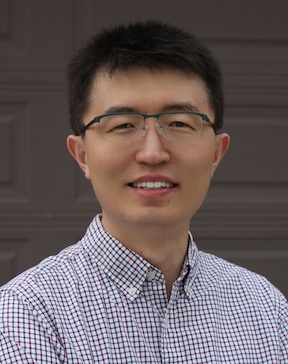
Tao Song, National Laboratory of the Rockies (NLR, formerly NREL)
Harrison Wilterdink, Stinton Instruments
Description
1. Fundamentals
- a. Definitions: irradiance (total, spectral), Standard Test Conditions (STC)
b. PV testing basics – Spectral response, current-voltage (I-V) characteristics
c. Translation of indoor test to STC – spectral mismatch, temperature corrections
d. Performance testing of PV modules
e. The PV calibration chain, traceability, and the meaning of “ISO accreditation”
f. International Standards
g. EL/PL imaging, covering both acquisition and common analysis techniques (e.g. Rs, J0, cracks)
h. Lifetime testing, covering both silicon boules and wafers, as well as common analysis techniques (e.g. J0e, bulk lifetime, J0metal)
- a. Challenges of multibusbar M10, M12 silicon cells
b. Probing methods for busbars and busbar-less cells for IV testing
c. Silicon module testing in the lab and in a production line, including
- i. Suns-Voc technique and common analysis (Rs, Rsh, power loss, conversion between voltage and lifetime)
ii. Practical considerations for production lines (calibration, capacitance, non-uniformity of irradiance, spectrum, etc.)
- a. Dynamic current response & I-V Hysteresis on perovskites
b. Steady-state measurement approaches: MPPT & Asymptotic IV
Harrison Wilterdink is Lead Engineer of R&D at Sinton Instruments in Boulder, Colorado, the maker of industry-standard tools like the WCT-120 and BCT-400 for measuring photoconductance and minority carrier lifetime of silicon wafers and ingots. Harrison has over 10 years of experience developing, installing, and supporting Sinton's lifetime and I-V testing tools in factories across North America, Europe, and China. He has been involved in international standardization efforts for PV metrology since 2016, and holds a Master of Engineering degree in Materials Science from the Colorado School of Mines.
Tutorial PM4: Expanding PV Deployment Through Dual-Use Pathways


Instructors: Silvana Ovaitt, National Laboratory of the Rockies (NLR, formerly NREL)
Michael P. Hayes, Louisiana State University
This tutorial explores the technical, design, and performance considerations of dual-use photovoltaic (PV) systems, including agrivoltaics, floating PV (FPV), and other co-located applications. Drawing from field experience, modeling tools, and real-world case studies, we examine how PV systems can be optimized to balance energy yield with agricultural productivity, water management, or land-use constraints. Topics include system design tradeoffs, environmental interactions, performance modeling, and emerging application-driven opportunities. The tutorial is intended for researchers, developers, and practitioners seeking practical insights into deploying and evaluating dual-use PV systems across diverse contexts.Silvana Ovaitt is a researcher at the National Renewable Energy Laboratory (NREL), working within the Field Performance and Reliability Group. Specializing in bifacial photovoltaic (PV) technology, Silvana's work primarily revolves around the optical and electrical performance and modeling of bifacial PV systems. Her research interests also extend into the Circular Economy, where she develops tools to research and quantify the impacts of various circularity pathways on PV’s sustainability within the broader context of the Energy Transition. Silvana also leads the Hands-on PV Experience (HOPE) Workshop at NREL, a well-established program now in its 13th year. This week-long immersive event offers PhD students hands-on, industry-relevant experience with photovoltaic technologies directly within NREL’s advanced laboratories.
Michael Hayes is an Assistant Professor for the Louisiana State University Agricultural Center and serves as the Louisiana Sea Grant Water Quality Specialist. He currently directs the LSU Water Quality Extension Lab and serves as the director of the LSU AgCenter's EPA-funded Pollution Prevention for Food and Agricultural Manufacturers (P2 FARM) Program. Michael Hayes' expertise ranges from agricultural water quality to best practices in industrial water and energy conservation. His lab provides technical assistance to a variety of facilities and communities around the state to optimize their resources and promote sustainable futures. With a research/extension appointment, Michael Hayes' research focuses on practical solutions to persistent problems around the state of Louisiana.