2026 IEEE William Cherry Award will be presented at the 54th IEEE PVSC to Prof. Dr. Uwe Rau. This presentation will take place on Monday, June 8 at 10:00 am.
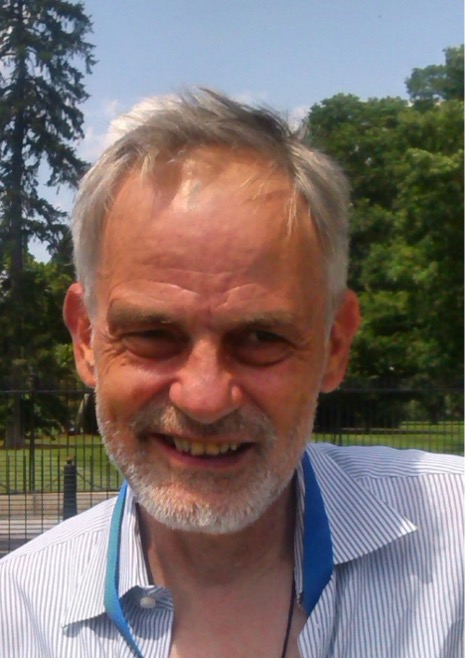
Prof. Dr. Uwe Rau Born in 1958, Prof. Dr. Uwe Rau is affiliated with Forschungszentrum Jülich, where he served as the Director of the Institute for Energy Research – Photovoltaics until 2025. He also held a faculty position (Chair of Photovoltaics) at RWTH Aachen University in the Department of Electrical Engineering and Computer Science. Prof. Rau’s research encompasses the fundamental physics of photovoltaic materials and devices, especially their optoelectronic properties. A prominent result is the reciprocity theorem between photovoltaic quantum efficiency and electroluminescent emission of solar cells. Prof. Rau worked on a wide variety of different solar cell technologies, including silicon heterojunction solar cells, dye-sensitized solar cells, and various thin-film solar cells based on Cu(In,Ga)Se2, thin-film silicon, organic compounds, and perovskites, mostly concentrating on device physics. He is also engaged in the analysis of outdoor data from photovoltaic modules and the optical and electronic characterization of semiconductor materials, concentrating on their defect physics, microstructure, and suitability as prospective photovoltaic absorbers.
Uwe Rau completed his diploma studies in physics at the University of Tübingen, Germany, with additional studies at the University Claude Bérnard in Lyon, France, and the Institute Laue Langevin in Grenoble, France. His PhD was earned at the Physical Institute of the University of Tübingen under R.H. Huebener, focusing on spatial structure formation during nonlinear electronic transport in semiconductors. He entered the field of photovoltaics in 1991 as a postdoctoral researcher at the Max-Planck-Institute for Solid-State Research in Stuttgart in the department of H.J. Queisser. Prof. Rau has then led multiple scientific groups, including at the Universities of Bayreuth and Oldenburg (with J. Parisi) and University of Stuttgart (with J.H. Werner). He also worked as a visiting scientist at Sony Research Center in Yokohama, Japan. His habilitation was obtained from the University of Oldenburg in 2002. In the year 2007 he joined the Forschungszentrum Jülich as Director of the Institute for Energy Research – Photovoltaics and the RWTH Technical University Aachen as a full professor. In Jülich, he also served as Scientific Director of the Graduate School ‘Helmholtz Interdisciplinary Doctoral Training in Energy and Climate Research’ (HITEC) and as a Scientific Coordinator for the interdisciplinary Master Program in Energy and Green Hydrogen, collaborating with the West African Science Service Centre on Climate Change and Adapted Land Use (WASCAL) and with various universities in West Africa.
About the Award
This award is named in honor of William R. Cherry, a founder of the photovoltaic community. In the 1950's, he was instrumental in establishing solar cells as the ideal power source for space satellites and for recognizing, advocating, and nurturing the use of photovoltaic systems for terrestrial applications. The William R. Cherry award was instituted in 1980, shortly after his death. The purpose of the award is to recognize an individual engineer or scientist who devoted a part of their professional life to the advancement of the science and technology of photovoltaic energy conversion. The nominee must have made significant contributions to the science and/or technology of PV energy conversion, with dissemination by substantial publications and presentations. Professional society activities, promotional and/or organizational efforts and achievements are not considerations in the election for the award.
Award Package
The award consists of a plaque, monetary award, recognition at the IEEE PVSC Opening Ceremony and a dedicated Cherry Award Talk during the Opening Ceremony.
Rules & Eligibility
- Nominee must be a scientist or engineer who has made significant contributions to the science and/or technology of PV energy conversion, with dissemination by substantial publications and presentations.
- Nominee must have had an extended period of activity in PV, contributions to the PVSC, and the expectation of continued activity. Single outstanding contributions are not sufficient.
- Professional and/or organizational efforts and achievements are not considerations for this award.
- Nominees are not required to be members of IEEE or EDS.
- Nominees from any country and institution are eligible.
- Previous recipients of the Cherry Award are not eligible.
- Self-nominations will not be accepted.
- Nominations will be carried over for one year.
- Unsuccessful nominations older than one year will need to be re-submitted.
WILLIAM R. CHERRY COMMITTEE
Thorsten Trupke Jenny Nelson Stephen R. Forrest Harry Atwater Tim Anderson Charles Backus Sheila G. Bailey Allen M. Barnett Paul Basore John Benner Henry W. Brandhorst, Jr. Timothy Coutts Keith Emery Dennis J. Flood
Americo F. Forestieri Vasilis Fthenakis |
Alex Freundlich Martin A. Green Christiana Honsberg Seth Hubbard Lawrence L. Kazmerski Richard R. King Sarah Kurtz Antonio Luque Sylvain Marsillac John D. Meakin Ryne Raffaelle Eugene Ralph Angele Reinders Steve Ringel |
Angus Rockett Ajeet Rohatgi Richard Schwartz Ronald A. Sinton James Sites BJ Stanbery Dick Swanson Pierre Verlinden Robert J. Walters David Wilt Eli Yablonovich Masafumi Yamaguchi |
Previous Recipients
Dr. Paul
Rappaport 1980 Dr. Martin A. Green 1990 Mr. Peter A. Iles 1991 |
Dr. Lawrence L. Kazmerski 1993 Dr. Christopher R. Wronski 2000 Dr. Richard M. Swanson 2002 Dr. Ajeet Rohatgi 2003 Dr. Timothy J. Coutts 2005 |
Dr. Antonio Luque 2006 Dr. Masafumi Yamaguchi 2008 Dr. Stuart Wenham 2009 Dr. Richard R. King 2010 Dr. Jerry M. Olson 2011 Dr. Sarah Kurtz 2012 Dr. Keith Emery 2013 Dr. Ronald A. Sinton 2014 Dr. Christiana Honsberg 2015 |
Dr. Pierre Verlinden 2016 Prof. Eli Yablonovitch 2017 Prof. Vasilis Fthenakis 2018 Dr. Harry Atwater 2019 Prof. James Sites 2020 Prof. Thorsten Trupke 2021 Prof. Stephen R. Forrest 2022 Prof. Jenny Nelson 2023 |